A report proposes reforming Chile’s electricity regulation to improve service quality, introducing performance-based incentives and a “brownfield” approach that reflects real infrastructure and supports energy transition challenges.
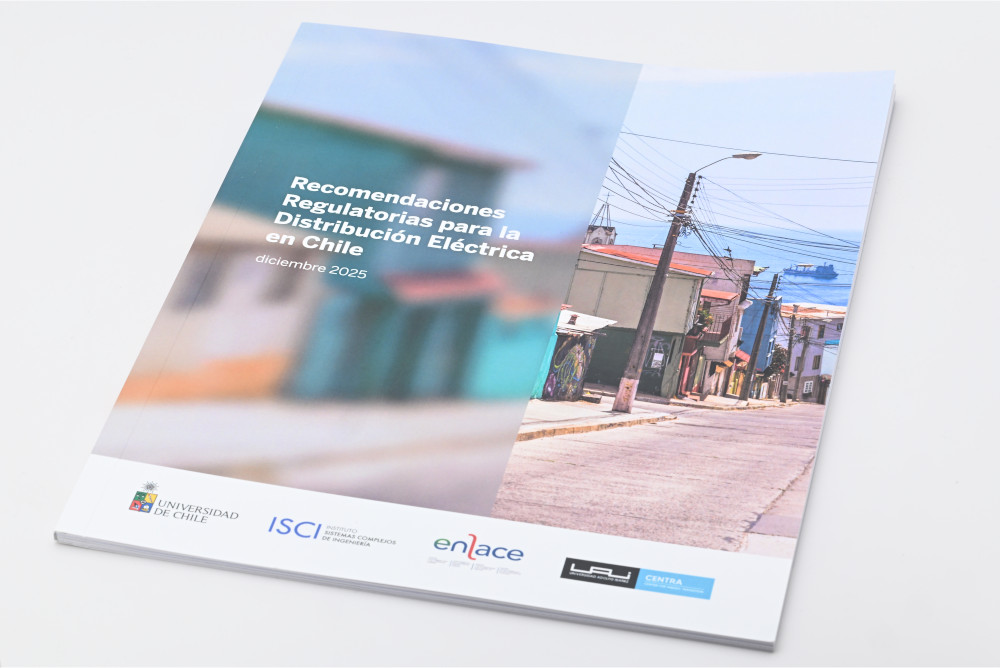
The quality of electricity supply in Chile faces persistent challenges. In this context, Rodrigo Moreno, an academic from the School of Business at Universidad Adolfo Ibáñez, Director of the ENLACE Energy Center, and leader of the Energy Group at the Institute for Complex Engineering Systems, proposes a series of structural changes to the current regulatory model through the report “Regulatory Recommendations for Electricity Distribution in Chile,” offering proposals to improve system performance and accelerate the energy transition.
A new study prepared by the Institute for Complex Engineering Systems (ISCI) and the Energy Transition Center (CENTRA) warns that the current electricity distribution model is not providing the necessary signals to ensure consistent service quality across the country.
A system that is not responding
The diagnosis is clear: the current regulatory model has failed to guarantee adequate levels of supply quality across different territories.
In 2023, the SAIDI indicator, which measures the average hours without electricity per user, reached 13.6 hours annually. In some municipalities, it exceeded 30 hours.
In 2024, the figure worsened. The national SAIDI rose to 27.6 hours.
A large portion of these interruptions originated from failures within the distribution network itself.
Where is the regulatory problem?
The report indicates that the current system does not generate sufficient incentives to correct persistent gaps, resulting in a structural failure in compensation policies.
This leads to delays in investment, territorial inequality, and a sustained deterioration in service quality.
The situation is especially critical considering that the country’s energy policy aims to approach one hour of annual interruptions by 2050.
From the ideal model to the real model
One of the most significant proposed changes is the shift from a ‘greenfield’ model to a ‘brownfield’ approach.
While the ‘greenfield’ model evaluates companies as if they operated a network built from scratch under optimal conditions, the ‘brownfield’ approach incorporates existing infrastructure and its real constraints.
This change aligns regulation with actual system conditions, recognizes past investments, and generates more stable signals for planning and network expansion—key elements to close quality gaps and move toward a more reliable service.
Incentives that matter
The report also proposes incorporating explicit performance-based incentives.
This means that distribution companies would be evaluated based on concrete results, such as supply quality.
Better performance could translate into benefits, while poor performance would lead to penalties.
The goal is to align economic incentives with service quality.
Investing in a system with uncertainty
Another key aspect is the need to manage uncertainty.
Factors such as future demand, the integration of renewable energy, and climate events affect system planning.
Therefore, the report proposes regulatory mechanisms that allow adaptation to these changes without hindering investment.
A system in transition
The document highlights that the distribution network is becoming increasingly strategic.
In addition to transporting energy, it also enables:
demand electrification
integration of renewable energy
system decarbonization
In this context, modernizing the regulatory model is no longer optional—it has become an urgent necessity.
The report represents a significant technical contribution to Chile’s energy discussion, in a context of transformation in the electricity system and growing demand for higher service quality.
Its development was made possible through the collaborative work between the Institute for Complex Engineering Systems (ISCI) and the Energy Transition Center (CENTRA), consolidating a proposal aimed at strengthening regulation and addressing the challenges of the energy transition.
The full document is available for download at the following link:
https://grupoenergia.isci.cl/recomendaciones-distribucion